
🔹 Why Maintenance Matters for LiFePO4 Inverters
Even though LiFePO4 batteries are maintenance-free, the inverter system around them still benefits from periodic checks. Regular attention ensures:
- Optimal charging and discharging cycles.
- Longer battery lifespan (up to 20 years).
- Consistent power output with minimal losses.
- Protection against environmental or usage issues.
Maintenance also helps preserve safety. Check LiFePO₄ safety features. And it extends battery life significantly. See detailed LiFePO₄ lifespan insights.
🔹 Best Practices for Maintaining LiFePO4 Inverters
- Follow Proper Charging Practices
- Avoid overcharging by using inverters with built-in Battery Management Systems (BMS).
- Stick to recommended charging voltages and currents.
- Use MPPT (Maximum Power Point Tracking) solar charge controllers for solar setups.
- Avoid Deep Discharges
- Keep depth of discharge (DoD) around 80% for best balance between performance and lifespan.
- Shallow cycles (30-60%) extend battery life even further.
- Temperature Management
- LiFePO4 performs best between 10°C and 45°C.
- Avoid exposure to extreme heat or cold.
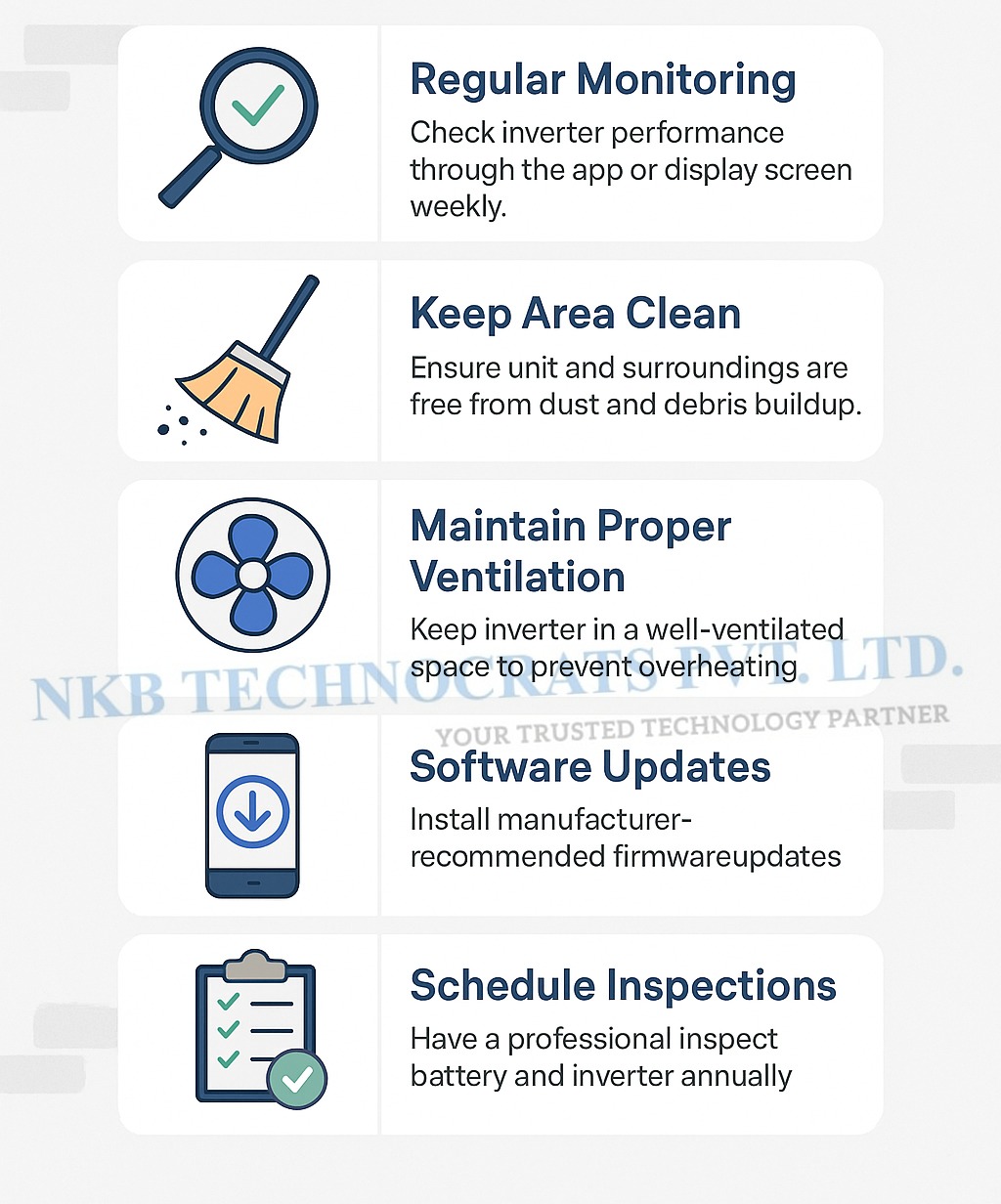
- Ensure proper ventilation if installed indoors.
- Check Wiring and Connections
- Inspect cables for wear, corrosion, or loose connections.
- Use the recommended cable size to minimize resistance and overheating.
- Periodically tighten terminals if needed.
- Monitor Performance with IoT/Display Systems
- Many modern inverters come with LCD or IoT-based monitoring.
- Track voltage, current, cycles, and state of charge.
- Detect anomalies early to prevent bigger issues.
- Regular Firmware/Software Updates
- If your inverter has smart features, keep its firmware updated.
- Updates can improve efficiency, safety, and compatibility with new solar systems.
- Prevent Idle Storage Issues
- If storing the inverter for long periods, keep the battery at ~50% charge.
- Disconnect loads to avoid parasitic drain.
- Recharge every 3-6 months if unused.
- Ensure a Clean, Dry Installation Area
- Keep away from dust, moisture, and direct sunlight.
- Install indoors or in a shaded, ventilated enclosure.
- Avoid environments with corrosive gases or high humidity.
🔹 How Often Should You Service a LiFePO4 Inverter?
- Monthly: Quick visual check for cables, terminals, dust.
- Quarterly: Performance monitoring review (capacity, cycle count).
- Annually: Professional inspection if used in critical applications (hospitals, data centers).


